

E-scooters and e-bikes have become a common sight in Canadian cities. They’re affordable, convenient, and enjoyable to use. But the rules—and the insurance—haven’t quite caught up. When a car and a scooter collide, it’s not always clear who’s responsible or if anyone is protected.
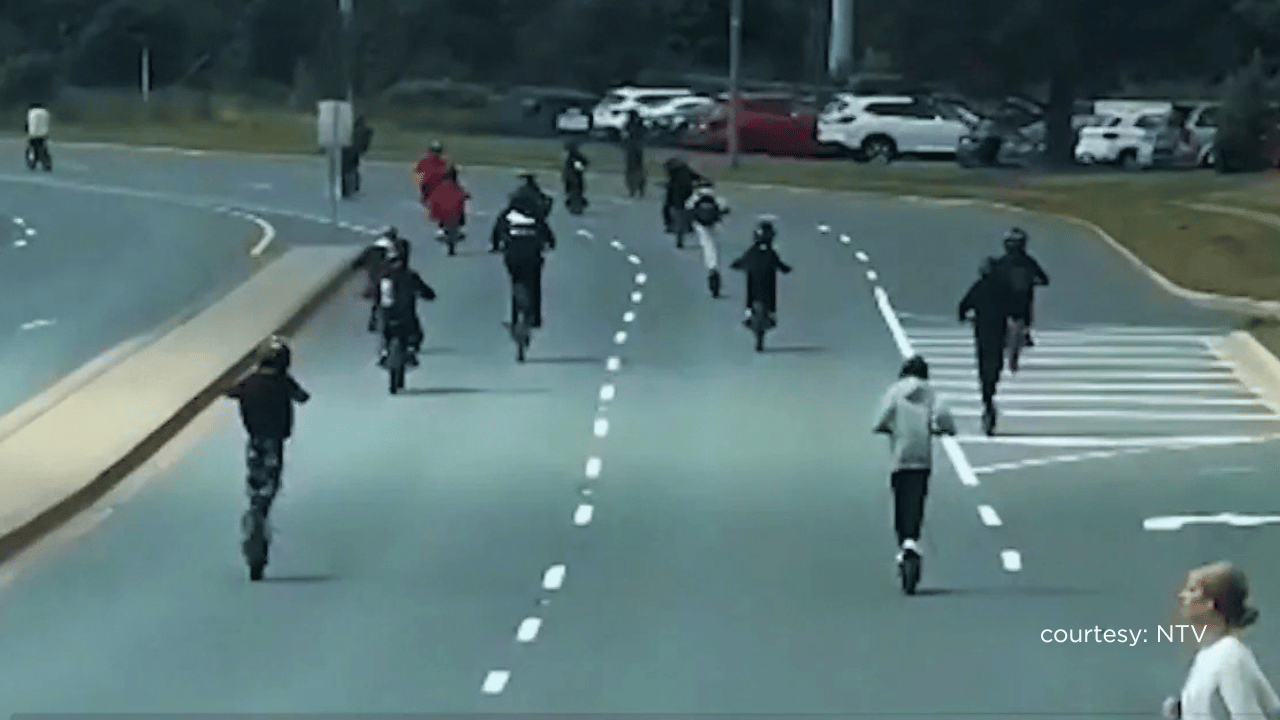
You’ve probably seen it yourself. NTV recently shared a video of about 30 young riders on e-scooters and e-bikes travelling together down Columbus Drive in St. John’s, spread across several lanes of traffic. (NTV News)
A recent decision from British Columbia highlights just how complicated things can get. It’s worth understanding, whether you’re driving or riding.
A 50/50 ruling that surprised a driver
In April 2024, a driver pulled out of a parking lot and turned right across a sidewalk. At the same time, an e-scooter rider was coming along that sidewalk, heading against the flow of traffic. White tents near the driveway blocked their views, and they collided when the car was halfway across.
ICBC, B.C.’s public auto insurer, first found the driver 100% at fault. He took it to the province’s Civil Resolution Tribunal, and in September 2026 the tribunal split fault 50/50.
Why? Surveillance video showed the rider was going “much more quickly than a pedestrian could walk or run, and not much slower than a pickup truck.” Riding that fast on a sidewalk, with tents blocking the view, was negligent. The driver was still on the hook for half, though. He couldn’t show he’d stopped right before crossing the sidewalk, which B.C. law requires.
So the driver got back half of his $300 deductible. It’s a small amount of money, but it’s a big signal. Scooter riders can be held responsible for how they ride. And drivers still carry a heavy duty of care around sidewalks and driveways. (Canadian Underwriter)
The bigger problem: most riders aren’t insured at all
Here’s the part that catches people off guard. In most of Canada, e-scooter riders don’t need a licence, registration, or insurance. And because these devices aren’t licensed, insurers haven’t been able to build products for them. One major Canadian insurer told Canadian Underwriter that since e-bikes and e-scooters aren’t licensed, it couldn’t say how they’d be insured. (Canadian Underwriter)
That leaves real gaps:
- Solo crashes. If a rider falls with no insured vehicle involved, there may be nothing to claim against.
- Injuring someone else. If a rider hits a pedestrian or damages property, there may be no liability coverage to respond.
- Recovery benefits. Riders don’t have a standard set of accident benefits like drivers and passengers do.
The rules also vary widely by province. Ontario caps e-bikes at 32 km/h and requires riders to be 16 or older. Quebec requires moped permits for e-bike riders aged 14 to 17. Here in Newfoundland and Labrador, e-bike riders aged 14 to 17 need a special permit. And Toronto bans e-scooters on most roads, sidewalks, and bike lanes. (Canadian Underwriter)
What the law says in Newfoundland and Labrador
Our Highway Traffic Act doesn’t mention e-scooters. It defines bicycles, power-assisted bicycles, mopeds, and motorcycles, but it has no category for a stand-up electric scooter.
That matters because the Act defines a motor vehicle as any vehicle “propelled, driven or controlled otherwise than by muscular power.” A bicycle, meanwhile, is defined as a device “propelled by human power.” An e-scooter with a motor doesn’t fit the bicycle definition, so it falls under the broader motor vehicle definition. Under section 75, you can’t operate a motor vehicle on a highway without an insurance policy in force. The Act also counts sidewalks as part of the highway.
So here’s the catch. The law expects motor vehicles to be registered and insured, but no insurer in Canada currently offers a policy for an e-scooter. That puts riders in a real grey area.
The Act is also clear about drivers. Under section 120, a driver coming out of a driveway, lane or parking lot has to yield to traffic on the highway and then proceed with caution. Section 164 only lets you drive on a sidewalk when you’re entering or leaving a driveway or lane. Section 127 also says drivers must use due care to avoid hitting pedestrians. In other words, the driveway crossing that caused the B.C. crash comes with the same duty of care here.
E-bike riders have their own rules. Section 129 says cyclists can’t ride on sidewalks, must keep to the right, and must wear a properly fastened helmet. (Highway Traffic Act, RSNL 1990 c H-3)
If you Drive
You can’t assume a scooter rider will be at fault just because they were somewhere they shouldn’t be. The B.C. case shows the opposite. Courts and insurers will still look hard at what you did.
A few habits help:
- Treat every driveway exit as a yield. The Highway Traffic Act requires you to yield before crossing into traffic, and a sidewalk is part of the highway.
- Watch both directions. Riders don’t always follow traffic flow, and scooters close distance much faster than people on foot.
- Slow down where parked vehicles, snowbanks, signs, or tents block your view.
- Get dashcam footage if you can. Video decided the B.C. case.
If you’re in a collision, report it to your insurer right away. How fault gets assigned can affect your deductible and, down the road, your premium. Talk to your broker if you think the split is wrong.
If you Ride
This is where it matters most. If you cause a crash, you could be personally responsible for someone else’s injuries or damage, and you may not have insurance to cover you.
Don’t assume your home or tenant policy covers you. Many home policies limit or exclude liability for motorized vehicles, and an e-scooter or e-bike can fall into that category depending on the wording. Some insurers offer coverage options; some don’t. The only way to know is to check your policy or ask.
And ride like you’re responsible, because you are:
- Stay off the sidewalk. Scooter crashes with cars often happen there, and NL law already bans bicycles from sidewalks.
- Slow down on shared paths, especially near driveways and blind corners.
- Wear a helmet. Injuries from these crashes can be severe.
- Make sure you’re visible with lights and reflective gear, particularly in the fall and winter.
Where this is Headed
Change may be coming closer to home. The provincial government recently consulted the public on updates to the Highway Traffic Act, and e-bikes, e-scooters, and other micromobility devices were one of the four areas under review. (NTV News)
Canada’s Traffic Injury Research Foundation has called for provincial working groups, clearer device definitions, better safety education, and more consumer awareness of insurance. Until licensing and regulations catch up, riders and drivers are both working in a grey area. (Canadian Underwriter)
Talk to Us
Whether you drive, ride, or do both, a quick review of your auto and home policies can save you a nasty surprise later. Our team can walk you through what’s covered and what isn’t.
LET'S TALK COVERAGE
Get coverage for your business, home, and car—with advice you can trust.
About Wedgwood Insurance
Wedgwood Insurance has offices in St. John’s & Corner Brook and is Newfoundland & Labrador’s largest independent insurance broker. We provide straightforward home, auto & business insurance advice.
With over 450 Google My Business reviews, experience the Wedgwood difference with expert advice from our dedicated team. We ensure that every client has the coverage that best suits their needs through upfront complimentary consultations and midterm reviews.
Contact Us


